QR Code Generator with Logo: Empower Your Camapigns

In a nutshell(TL;DR): A QR Code generator with logo lets you add branding like logos, colors, and styles to boost recognition, trust, and engagement without affecting scannability. Brands like Taco Bell, Nissan, and IKEA use them in campaigns. Scanova offers features like logos, shapes, gradients, and error correction. You can create a custom QR Code with a logo in just a few steps.
QR Codes are among the most commonly used interactive technologies for businesses today.
They help you reach your audience across offline and digital channels (such as websites and social media) with a simple scan.
And you’re probably planning on using them too. But you don’t want a boring black-and-white QR Code for your campaign. You would rather need the one that looks customized or branded to your business.
And the good news is that QR Codes can also be customized by adding colors and a logo. Many brands leverage this feature to also build brand awareness among their target audience. That means a single QR Code not only makes their creatives actionable but also helps increase brand recognition. Isn’t that great?
So you’re looking for a QR Code generator with logo functionality that helps you add logos to QR Codes. This logo could be an image or even text (CTA or tagline).
In this article, we’ll tell you how to do it in detail.
A. What is a QR Code with a logo?

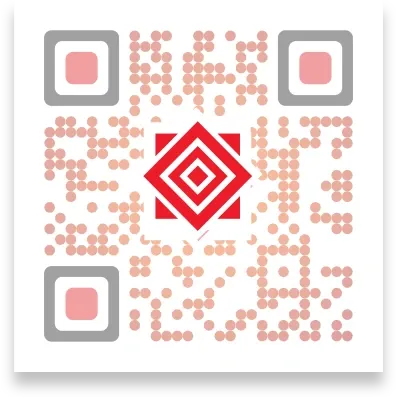
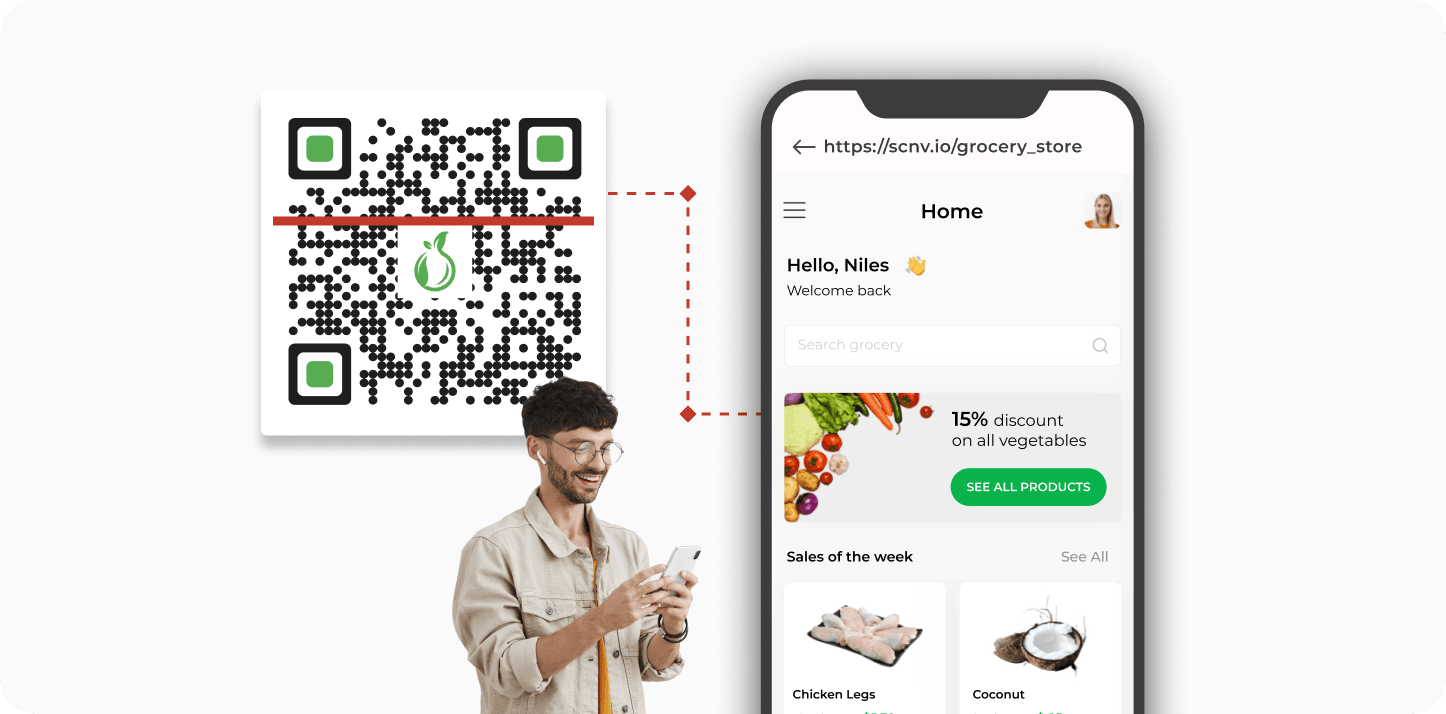
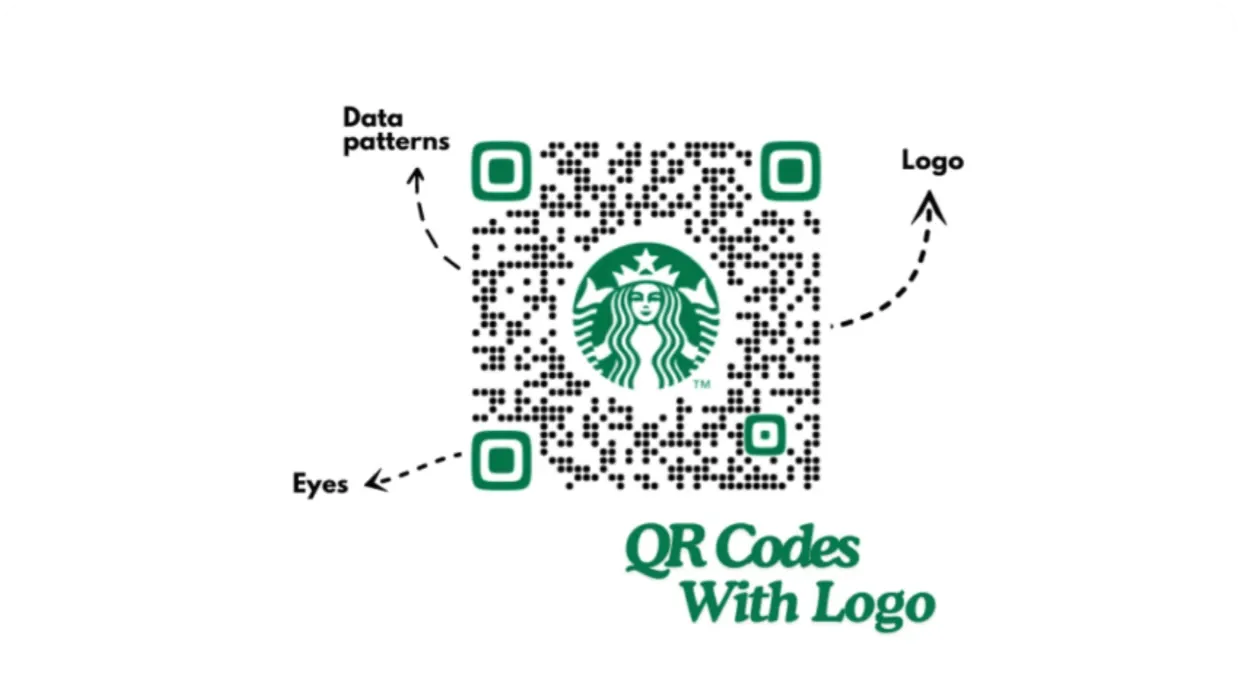
A QR Code with logos is a standard QR (Quick Response) Code that has been customized with additional branding elements, typically logos or other visual identifiers.
Adding logos to QR Codes is a common practice for businesses and organizations to make the codes more visually appealing and incorporate branding into their marketing materials.
However, it’s essential to ensure the logos do not interfere with the QR Code’s functionality.
The logos should be placed strategically so that they do not obscure the QR Code’s scanning area or compromise its readability.
Let’s learn about the other customizable elements of a QR Code.
“Most people decide whether to scan a QR Code in a split second. A branded QR Code immediately tells them who it belongs to, reducing hesitation and building trust. We consistently see that campaigns using logos, brand colors, and a clear call-to-action attract more engagement than plain black-and-white codes because the experience feels intentional, not anonymous.” – Siddharth Pangtey, Product Manager at Scanova
B. What are the customizable elements of a QR Code?

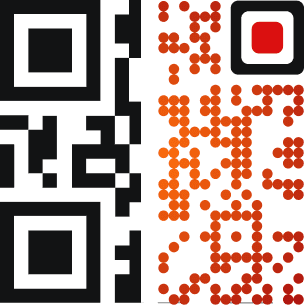
The basic elements of a QR Code that can be customized are:
a. Background color
b. Inner and Outer eye
c. Data Modules
D. Logo
Using these elements, you can make the QR Code look branded. Here’s what you can do:
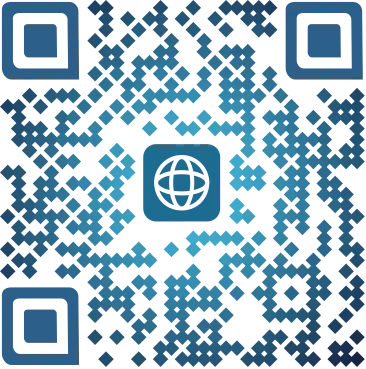
1. Add your brand logo or CTA in the center
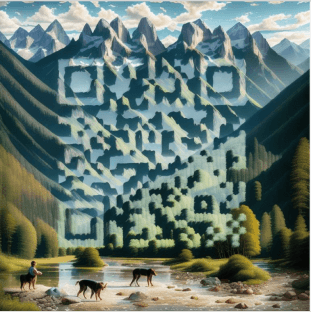
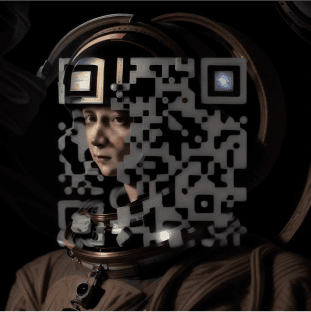
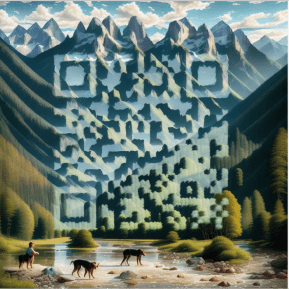
2. Use an image or logo as the QR Code’s background image
3. Change the color of the QR Code’s eyes (inner or outer or both)
4. Change the pattern of the QR Code’s eyes
5. Add colors to the data modules (tiny squares that run as a matrix enclosed by the eyes)
6. Change the pattern of data modules
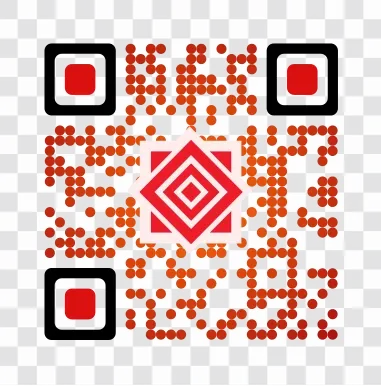
7. Add color to the background or make it transparent
While it’s great to design your QR Code, it can also offer many benefits beyond good visual appeal. Not sure how? Here’s the answer:
C. What are the benefits of a customized QR Code?

Customized QR Codes are sure great to look at. But as a business professional, you should seek perks beyond that, too. Here are some of them:
1. Better brand recognition is one of the most sought-after benefits here. When the end-users look at a QR Code with a logo and brand colors, it makes them more receptive to your brand
And it’s no surprise that a positive brand recall does wonders for any business.
2. QR Codes with customized design tend to act as a point of engagement. This is very helpful in grabbing the audience’s attention. When that happens, the QR Code gets more scans. And it is, in fact, true that Customized QR Codes get far more scans than black-and-white ones
3. With customization, you can even color-code the QR Codes for any operational use case. For example, say you’re using them for inventory management of two product lines.
Here, you can change the color of the QR Codes added to each product line’s boxes (e.g., red for one and blue for the other). This way, even looking at a box will help your staff know which lot it belongs to.
D. Why do you need a QR Code with your logo?

Let’s face it—standard black-and-white QR Codes don’t leave a lasting impression. If you’re investing in packaging, posters, or digital campaigns, a plain code feels out of brand.
That’s where QR Codes with logos come in.
A logo inside your QR Code:
- Builds trust instantly (“Oh, this is from the brand I know!”)
- Increases scans and engagement
- Helps your marketing stand out in cluttered spaces
- Enhances visual design without sacrificing function
Think of them as clickable brand signatures in physical form.
E. Which global brands are using QR Codes with a logo?

Now that you know the basics, you may want to see how others use designer QR Codes in their campaigns. Well, here are some of them:
1. Taco Bell
TacoBell ran a successful campaign in 2012 where they placed their QR Codes on all of the holster packages.
They customized the data modules of their QR Code to look like lemons.
Doing this helped the brand increase audience engagement for the campaign.
2. Nissan Motors
Nissan used customized QR Codes on all of the car window stickers in 2012.
These QR codes led users to read complete product information. For example, key features, product overview videos, and accessories. This initiative helped the brand increase mobile engagement.
3. General Motors
General Motors is another big player here. They decided to add customized QR Code stickers on their Chevrolet cars.
They replaced their Service Parts Identification (SPID) labels with these customized QR Codes. These QR codes included a CTA (Call to Action): “Scan to Know the Role of Chevy in Film or Music”.
They also replaced car parts with QR Codes to provide a better way to access information.
4. Furphy
In 2021, Furphy planned to add customized QR Codes on posters and coasters in Australia. Each of these QR Codes urged people to tell their unbelievable stories and win a prize. These were then placed in almost 900 bars and restaurants.
Scanning the QR Code allows users to share their stories via video or audio.
This eventually helped the company increase its sales and customer engagement.
5. IKEA
In 2021, IKEA used customized QR Codes to facilitate easy checkout for large furniture.
In fact, many brands, such as Decathlon, have also used QR Codes for similar use cases in the past.
F. Using Scanova’s QR Code generator with logo
The first thing you need here is, obviously, a QR Code generator with a logo design. While many are available online, choosing one can be confusing and tedious.
So, you can refer to this guide on the Best QR Code generators. It compares all the top players in detail. It will help you make a sound decision.
Step 1 — Go to Scanova
Open your browser and go to scanova.io. On the homepage, click Create QR Code to open the QR Code creation page.
Step 2 — Choose the Website URL category
You will see a list of QR Code categories covering different content types — URLs, PDFs, videos, plain text, and more. Select Website URL to create a QR Code that opens a webpage when scanned.
Step 3 — Enter your URL and continue
A text field appears. Type or paste the full website URL you want the QR Code to link to — for example, your homepage, a product page, or a landing page. Once done, click Continue.
Step 4 — Sign up for a free trial
At this point, Scanova will prompt you to create an account. Enter your email address and set a password, or sign up with Google for a faster setup. A 14-day free trial begins automatically, and no credit card is required to get started.
Step 5 — Name your QR Code and create it
On the next screen, give your QR Code a name that helps you identify it later — something like “Homepage QR Code” or “Campaign Landing Page.” Click Create QR Code. A preview of your QR Code is generated on the right side of the screen, along with an Edit Design button.
Step 6 — Open the design editor
Click Edit Design to open the design panel. You will see two primary options: Custom Logo and Custom Background. Custom Logo lets you place a logo or text in the center of the QR Code. Custom Background lets you place the QR Code over a full image.
Step 7 — Add a logo to the center
Select Custom Logo and open the Logo tab. Two options appear:
Add an image as logo: Upload a PNG, JPG, or JPEG file up to 5MB — typically your brand logo or product icon. Once uploaded, three controls become available:
- Size — drag the slider to increase or decrease how much of the QR Code the logo covers
- Remove Blocks Around Logo — toggles off the data modules immediately surrounding the logo, giving it a cleaner, less cluttered appearance
- Stroke — adds a padding border around the logo image; you can also pick a custom stroke color to improve contrast or match your brand palette
Add text as logo: If you do not have a logo file, you can type a short word or phrase directly into the center of the QR Code — such as “SCAN ME” or your brand name. Font style, text color, and box dimensions can all be adjusted.
Step 8 — Customize eyes, data, background, and error correction
With your logo set, use the remaining tabs to style the rest of the QR Code:
- Eyes tab — the three square finder patterns in the corners of the QR Code are called eyes. This tab lets you change their inner and outer shapes and colors, either together or independently, to create a more distinctive look.
- Data tab — the grid of small modules that make up the body of the QR Code. Change their shape (squares, dots, rounded) and color, or apply a gradient across the entire pattern.
- Background tab — change the QR Code’s background color or make it fully transparent for use on colored packaging or print materials. Always keep a strong contrast between the modules and the background to ensure reliable scanning.
- Error Correction tab — Scanova automatically increases the error correction level when a logo is added. A higher error-correction level adds more redundancy to the QR Code, so it remains scannable even when the logo covers part of the data.
If you prefer a full background image instead of a solid color, select Custom Background, then click Upload New Image. Position and resize the QR Code over the image to your liking, then click Preview to see how it looks before moving forward.
Step 9 — Preview and test your design
Click Done Editing to close the design panel and see a final preview of your QR Code. Before downloading, test the scan by pointing your phone camera or a QR Code scanner app at the preview on screen. Confirm it opens the correct URL and that the design does not interfere with scannability.
Step 10 — Download your QR Code
Once satisfied, click Continue to Download. Choose your preferred file format — PNG for digital use, SVG or EPS for print and scaling, or PDF for document embedding — and set the output size. Click Export, and your QR Code file downloads to your device, ready to deploy.
G. What parts of a QR Code can you customize?
Scanova’s QR Code generator allows you to tweak almost every design element:
| Element | Description |
| Logo | Upload image (PNG, JPG) or enter text/CTA |
| Background | Solid color or transparent (even image background) |
| Data modules | Change shape (dots, squares), apply gradients |
| Eyes (3 squares) | Adjust inner/outer colors and patterns |
| Error correction | Automatically adjusts to maintain scannability |
According to Scanova’s internal platform data, 98% of QR Codes created on the platform are dynamic and trackable. This reflects a growing shift among businesses toward editable QR campaigns that can be updated, measured, and optimized after deployment rather than relying on static codes with no performance visibility. – Scanova Research Team
H. Real-world benefits of branded QR Codes
Branded QR Codes aren’t just about aesthetics; they deliver measurable value across marketing, operations, and customer experience.
Here’s how custom-designed QR Codes can elevate your business:
1. Stronger brand recognition
When users see a QR Code with your logo, colors, or font style, they instantly link it to your brand. This boosts brand recall and builds trust—especially important in customer-facing industries like retail, events, and food delivery. Think of it like a mini digital business card embedded in every scan.
2. Higher engagement and scan rates
Branded QR Codes naturally stand out. Unlike generic black-and-white codes, customized ones catch the eye. In fact, studies show they can lead to up to 30% more scans, simply because they’re more appealing and signal legitimacy.
3. Visual organization for internal operations
Need to streamline processes? Use color-coded or logo-based QR Codes for different departments, SKUs, or use cases—like warehouse logistics, employee access, or asset tracking. It reduces confusion and improves productivity.
4. More professional customer touchpoints
In sectors where trust and polish matter—like finance, healthcare, or hospitality—custom QR Codes add a layer of professionalism to your print and digital assets. Whether it’s on packaging, ID cards, receipts, or signage, they show you pay attention to detail.
I. What are the best practices while using QR Codes with a logo?

When using and deploying QR codes, especially personalized ones with logos, there are several best practices to ensure effectiveness and usability:
1. Ensure readability: One of the most important aspects of a QR Code is its readability.
Make sure the QR Code is properly generated and can be easily scanned by a variety of devices and apps.
2. Choose the right size: QR Codes should be large enough to be scanned easily, but not so large that they take up unnecessary space.
Generally, they should be at least 2 x 2 cm (about 0.8 x 0.8 inches) in print and 200 x 200 pixels in digital formats.
3. Maintain proper contrast: Ensure that there is enough contrast between the QR Code and its background to make it easily scannable.
Dark QR Codes on a light background or vice versa usually work best.
4. Use high-quality images: If you’re incorporating a logo or any other image into the QR Code, make sure it’s high-quality.
Low-resolution images can degrade QR code readability.
5. Test across devices: Test the QR Code across different devices and QR Code scanning apps to ensure compatibility and readability.
What works on one device or app might not work as well on another.
6. Provide context: Include instructions or a call-to-action alongside the QR Code to let users know what to expect when they scan it.
For example, “Scan to visit our website” or “Scan for exclusive discounts.”
7. Avoid redirects: Whenever possible, link directly to the intended content rather than using intermediate redirects.
This ensures a smoother user experience and reduces the risk of errors.
8. Track and analyze: Utilize analytics tools to track QR Code scans and user engagement.
This data can provide valuable insights into the effectiveness of your QR Code campaigns and help you make informed decisions for future deployments.
9. Regularly update content: If the QR Code links to dynamic content that may change over time (e.g., promotions, event details), make sure to update the linked content accordingly to provide accurate information to users.
10. Respect privacy: If the QR Code leads to a form or collects personal information, ensure that proper privacy measures are in place and that users are informed about how their data will be used.
By following these best practices, you can ensure that your QR code campaigns are effective, user-friendly, and deliver the intended results.
J. FAQs: Branded QR Code Generator
1. How to create a QR Code with a logo?
You can create a QR Code with a logo using a QR Code generator with a logo feature. You can use Scanova’s QR Code generator with a logo for this purpose.
2. What is a QR Code generator with a logo?
A QR Code generator with a logo is a tool that lets users create QR Codes with custom logos or images embedded.
This helps in branding and making the QR Codes visually appealing.
3. How does a QR Code generator with a logo work?
A QR Code generator with a logo works by allowing users to upload an image or logo, which is then overlaid onto the QR Code.
The generator ensures the logo does not interfere with the QR Code’s functionality and remains scannable.
4. Are QR Codes with logos scannable?
Yes, QR Codes with logos are designed to remain scannable. The QR Code generator with logo optimization optimizes the logo’s position and transparency to ensure it does not interfere with the scanning process.
5. What are the benefits of using a QR Code generator with a logo?
Some benefits include:
- Branding: Adding a logo helps in branding and makes the QR Code recognizable.
- Visual appeal: Logos make QR Codes more visually appealing, increasing the likelihood of engagement.
- Recognition: Logos can help users more easily identify the QR Code’s purpose or origin.
6. Can I customize the appearance of the QR Code and the logo?
Yes, most QR Code generators with logo functionality allow users to customize various aspects such as color, size, shape, and position of both the QR Code and the logo.
7. Are there any limitations to using QR Codes generated via QR Code generator with logo?
While logos can enhance the visual appeal of QR Codes, it’s important to ensure they don’t obscure the QR Code’s crucial elements or make it difficult to scan. Overly complex logos or those with intricate details might not work well.
8. Can I use QR Codes with logos for commercial purposes?
Yes, QR Codes with logos can be used for commercial purposes such as marketing campaigns, product packaging, business cards, and advertisements.
9. Do QR Code generators with logo functionality require any special software or skills?
No, most QR Code generators with logo functionality are user-friendly and accessible via web browsers.
Users typically don’t need any special software or technical skills to create QR Codes with logos.
10. Are there any copyright considerations when using logos in QR Codes?
Yes, it’s important to ensure that you have the right to use the logo in your QR Code, especially for commercial purposes.
Obtaining permission from the logo’s owner or ensuring that the logo is royalty-free is advisable to avoid copyright issues.