GS1 Sunrise 2027: All You Need To Know
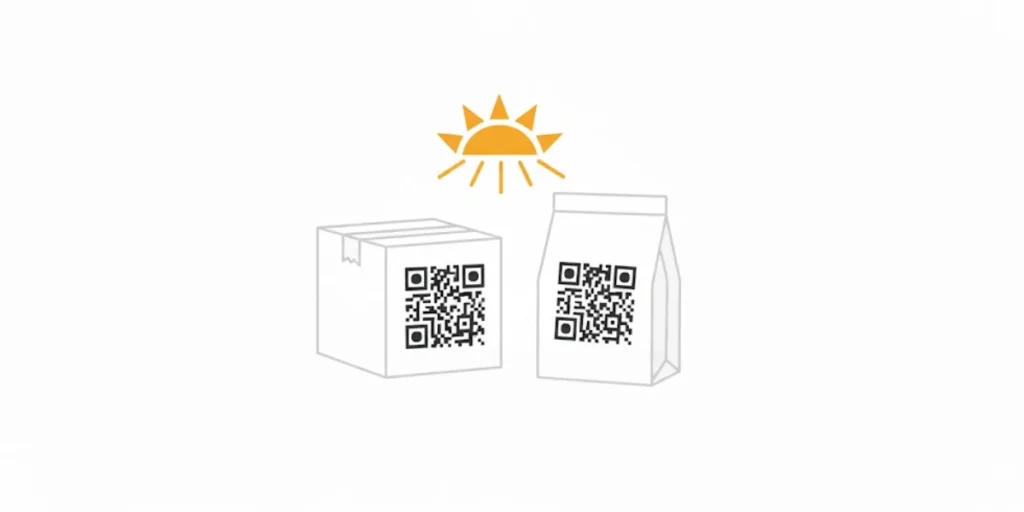
In a nutshell: GS1 Sunrise 2027 is the global shift from 1D barcodes to GS1 2D barcodes like QR Codes. These codes store more product data and link to live information, enabling better tracking, faster recalls, and instant access to product details with a single scan.
GS1 Sunrise 2027 is the industry’s plan to replace outdated 1D barcodes (UPC/EAN) with more advanced 2D codes by the end of 2027.
Every product will carry a GS1-standard QR or Data Matrix code, besides the familiar UPC.
Why? Because 2D codes hold much more information.
They can embed the GTIN, batch/lot, serial numbers, and expiry dates. It will even have a link to live online data – all in one tiny square.
By 2027, retailers worldwide will need to have scanners that can read both the legacy barcode and the new 2D code.
In short, Sunrise 2027 is the supply chain’s roadmap to “web-enabled” products. This will allow every package to carry a richer data payload with just one simple scan.
A. Why are 2D barcodes important?
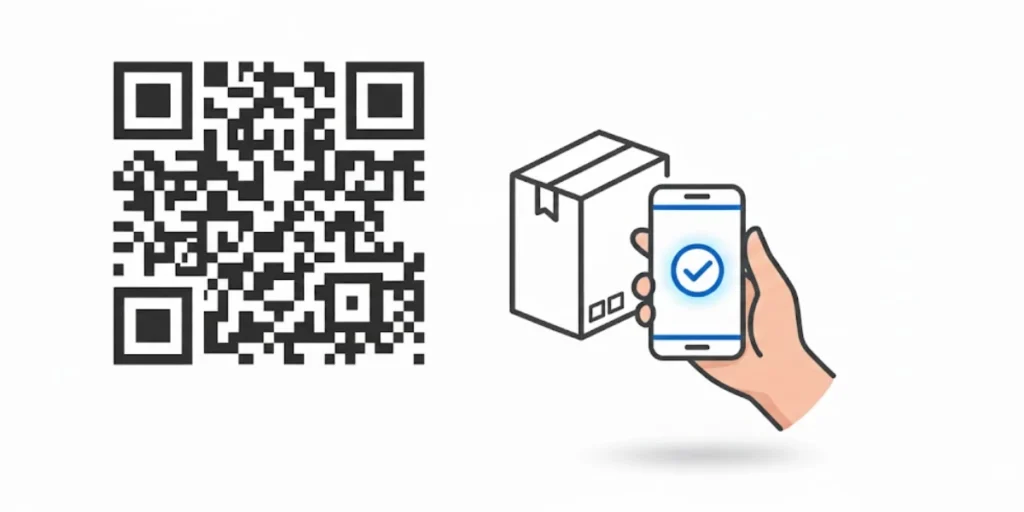
2D barcodes (such as QR Codes and GS1 DataMatrix) offer many advantages over traditional UPCs. A single 2D symbol can store dozens or hundreds of characters.
For example, you could encode a product’s GTIN, a batch/lot number, and expiry date. Additionally, a serial number and a product web link can be added simultaneously.
This extra data isn’t for show; it powers better traceability and recall management.
If every item is scanned into inventory using a unique code, each item is tracked. When a recall happens, you can instantly see which exact items are affected.
Moreover, 2D symbologies have built-in redundancy and error-correction. Even if part of the code is scratched or obscured, image-based scanners can often still read it.
In practice, that means fewer scanning mistakes and less waste from unreadable labels. By contrast, a torn or dirty 1D barcode often becomes useless.
Another significant benefit is the ability to create dynamic content via web links.
With GS1’s Digital Link standard, a QR Code on a product contains a web link. This link points to an ID, such as https://id.gs1.org/01/01234567890128. The barcode then becomes a direct gateway to online information.
Brands can link a QR Code to an online product page or menu. The digital content can be updated at any time. There’s no need to reprint the code once it’s on the packaging.
For example, a food company can link the QR Code to nutrition facts, recall alerts, or coupons. They can update this content anytime.
GS1 explains it simply: the QR Code’s link stays the same. Only the content changes, not the printed code.
In other words, one code does it all: it still scans at the checkout. Also, it directs shoppers to live product information on the web.
When customers scan a 2D code with their phone, they get instant access to information.
It can even lead to interactive experiences. For example, scanning a cereal box could show a “farm-to-bowl” video.
All of this is done with the same code that the store uses for checkout.
So 2D barcodes make packaging more useful to everyone. It means better data for factories and retailers, as well as richer information for consumers.
B. The GS1 digital link standard
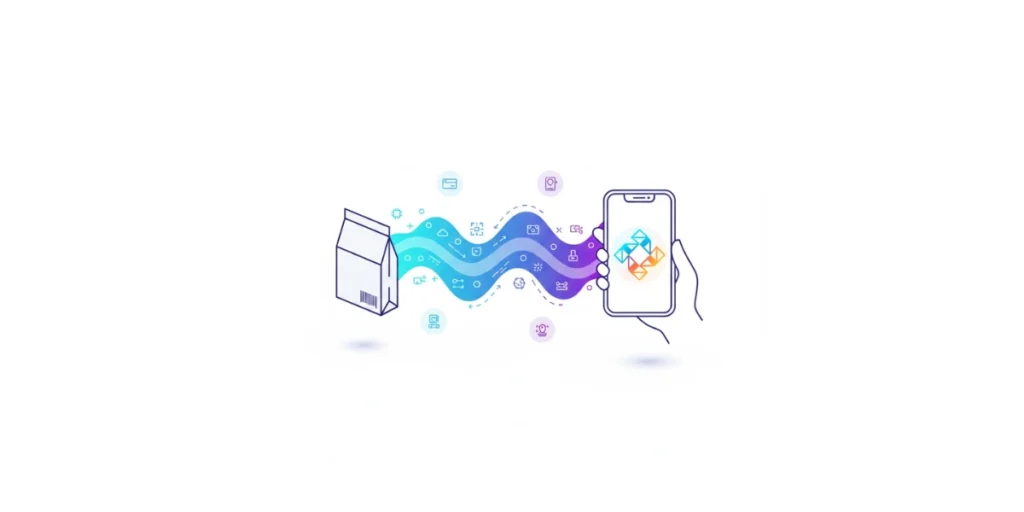
A key innovation in Sunrise 2027 is the GS1 Digital Link standard. It essentially treats every GS1 identifier (like a GTIN) as a web address.
In practice, the QR on a product will contain a URL such as https:// id.gs1.org/gtin/01234567890128/lot/12345/expiry/20231231.
(Here, “gtin” and “lot” in the path tag the data that follows.)
When you scan the QR Code with a smartphone, the phone’s browser connects to GS1’s resolver (for example, id.gs1.org). The resolver then looks up that GTIN in a database and forwards you to the right content.
For instance, it might direct you to the brand’s webpage for that product. It could also be a menu of options, such as “Product Info,” “User Manual PDF,” or “Batch Status.”
In effect, every product gets a persistent online home. Brands can choose to run this on GS1’s global domain (id.gs1.org) or use their own web domain for branded links.
GS1 Digital Link “brings two disparate entities, the GTIN and a brand’s domain, together in the same URL.”
The result is a single QR Code that serves two purposes. A checkout scanner can still extract the GTIN and price, even offline.
At the same time, a consumer’s phone can load the same code’s URL to show rich content. GS1 explains that the pages behind the web link can serve different audiences.
They can show information for consumers and for supply-chain partners.
If the brand later updates its website or content, it only changes the destination of the link. The QR Code itself never needs to be reprinted.
In short, the Digital Link turns a 2D barcode into a powerful, updatable link. Whether it’s for tracing a parcel or engaging a shopper, one scan covers it all.
C. Who will be affected?
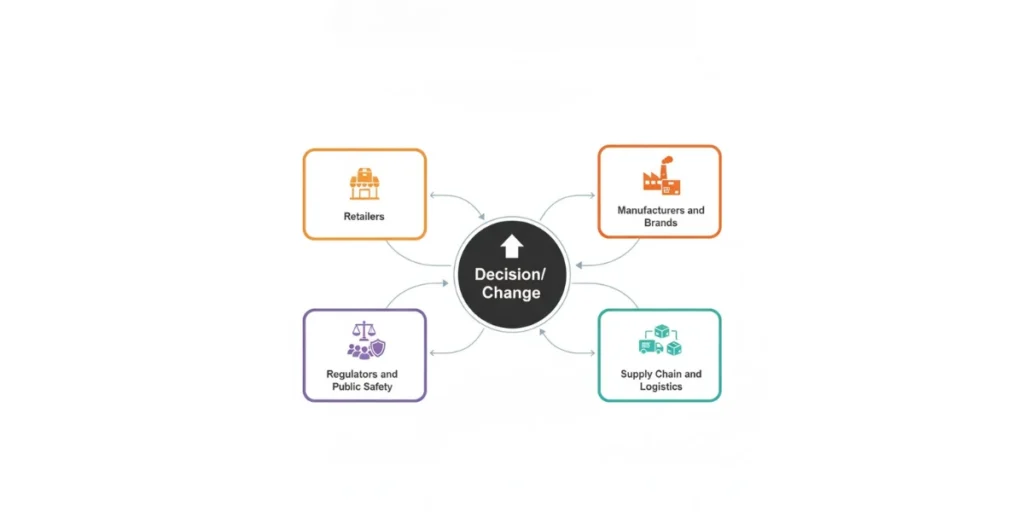
Sunrise 2027 impacts everyone in the product journey:
1. Manufacturers and brands
They will need to redesign the packaging and labels to include the new GS1 2D barcode, in addition to the existing UPC.
That means updating artwork and getting 2D-capable printers or inkjet systems.
First, decide what additional data you want to include in the code (e.g., GTIN, lot numbers, serial numbers, expiration dates, etc.).
For products with a high degree of variation, such as lot numbers or serial numbers, many brands utilize on-demand digital printing. This printing happens directly on the production line.
Brands also need to plan how they will utilize Digital Links and where those links will direct users.
Print quality matters more than ever. QR Codes and DataMatrix codes need clear space around them, strong contrast, and clean printing to scan properly.
To make this work, companies will use automated tools to check barcode quality. This can include barcode grading software or camera-based checks on the production line.
As a result, brands should expect new equipment and updated processes. For example, 2D barcode readers may be used to inspect labels.
GS1 also provides free tools and guidelines to help brands encode their data correctly.
2. Retailers
Stores and checkout systems must upgrade scanners and software to handle 2D codes. By 2027, every point-of-sale terminal should be able to scan a QR Code or Data Matrix.
GS1 carried out some pilot tests. It found that many retailers with image-based scanners experienced difficulties processing 2D code data. Source: gs1.org
In other words, it’s not enough that the scanner reads a code; your POS also needs software to parse the new fields.
Stores will need to check and likely replace older laser scanners. New 2D-capable imagers are in high demand.
It’s a big change, but it pays off: once upgraded, retail staff can scan a single code. This will give them access to complete product info.
They can use it for price lookup, inventory counts, and rapid recall checks on the floor.
GS1 notes that using QR Codes at checkout improves inventory tracking. It also helps reduce losses and verify products efficiently.
During the transition, many companies will use both codes on the same package. They will keep the old UPC and add a new 2D code. This way, both old and new scanners can operate.
3. Supply chain and logistics
Wholesalers, warehouses, and logistics providers also enjoy richer data. A DataMatrix on a case or pallet can list the contents (GTINs of each SKU inside) and shipment info. This makes scanning freight and tracking pallets much more efficient.
As a product moves through distribution centers, it gets scanned at each step. Every scan updates the inventory system with details like lot numbers and expiry dates.
This makes products easier to trace and helps reduce errors. In a supply chain crisis, this means pinpointing problem batches much faster.
In short, 2D codes let every party in the chain see exactly what’s inside every package and when it expires, at a glance.
4. Consumers
Shoppers will definitely notice more scannable codes. Instead of just scanning barcodes for price checks, people will scan products to learn about them.
A customer can scan a QR Code on a package with their phone. They can see details such as the product’s origin, ingredients, allergens, certifications, and sustainability scores.
The code can also open user manuals, recipe videos, or coupons. It shows whatever the brand shares on its mobile site.
Many consumers want this kind of information, and GS1 confirms that demand is high.
For safety-focused buyers, this is a big benefit. For example, they can scan a medicine to check if it’s real, or see if their produce comes from a local farm.
5. Regulators and public safety
Government agencies and safety regulators can use the extra barcode data to track products and handle recalls.
If there is a food or medical recall, officials can scan a product in a store. They can see its batch number and end date.
This allows recalls to occur and only for the affected items. GS1 says Sunrise 2027 improves product traceability and recall readiness. This helps protect public health.
In short, 2D codes give regulators and responders precise data for every product.
D. How will the transition happen?
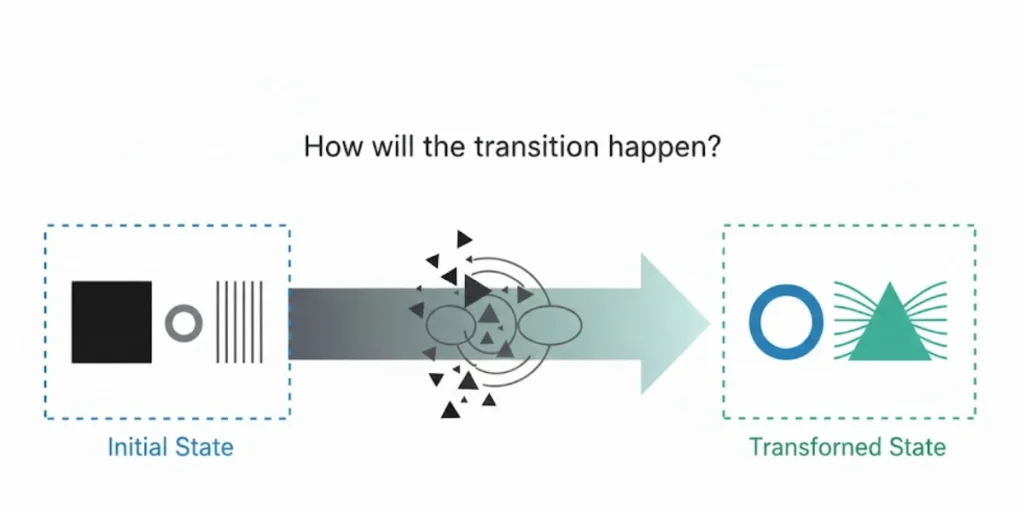
The move to 2D codes will be phased in over time, not one big overnight switch:
1. Pilot & dual-labeling (Now–Mid 2020s)
Many brands and retailers are already experimenting. During this phase, companies can place both a 1D UPC and a new 2D GS1 code on packages.
This allows every system to continue using the old code while testing the new one.
GS1 encourages pilots and test programs now. Some global players are already using dual-labels in selected markets.
Retailers can try scanning 2D codes alongside UPCs to identify and resolve any issues.
2. Mandatory phase-in (Mid 2020s)
Next, certain industries or countries will begin requiring 2D codes. At this stage, any new packaging for key categories will need to use GS1-compliant QR/DataMatrix codes.
Retailers and distributors in those markets will tighten their POS to only accept the 2D codes.
Essentially, this forces everyone to get ready. Reports indicate that by the mid-2020s, 2D scanning will be mandatory in most retail settings.
3. Full compliance by 2027
Ultimately, by the end of 2027, GS1 aims for global compliance. All new products worldwide would carry only the GS1 2D barcode for checkout. POS systems everywhere should by then fully recognize the standard GS1 2D format.
After 2027, in any store from Tokyo to Toronto, the same GS1 rulebook will govern barcodes from end to end.
GS1 US refers to this as “the next dimension in barcodes” and predicts it will make supply chains interconnected. Source: gs1.org
As one tech leader put it, Sunrise 2027 will be “the most significant change to product identification standards in decades”.
It reshapes labeling, scanning, and data flows at every step.
E. How to prepare for Sunrise 2027?
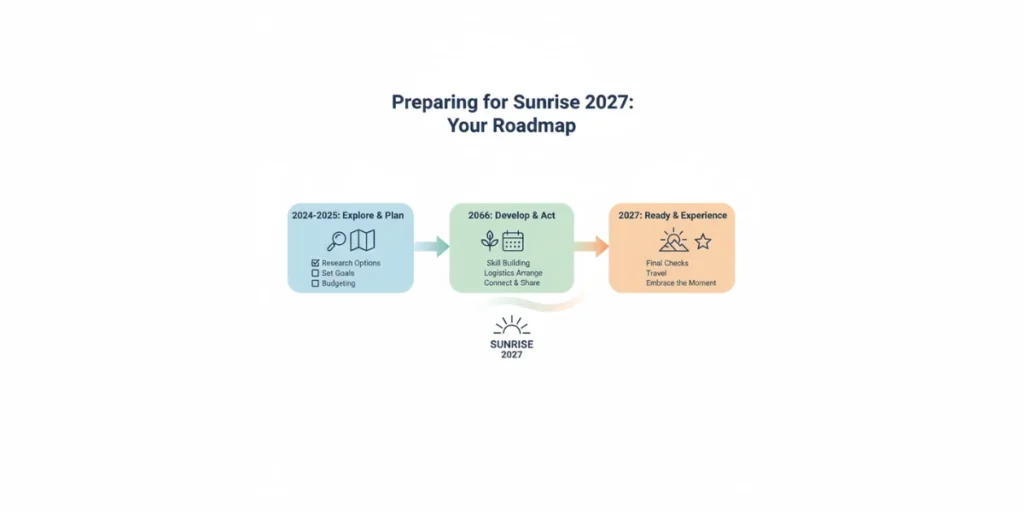
The clock is ticking; businesses should start planning now. Here are some key steps:
1. Audit your systems
Check if your current scanners, POS, and software support 2D codes. If you still use old laser scanners, budget to upgrade to modern image-based readers.
If your point-of-sale software can’t parse more 2D fields (lot, expiry, etc.), engage your IT or vendor to add that capability.
Also, review your label printers: can they print crisp QR/DataMatrix symbols? You may need new high-resolution printers or inline digital printing for batch/serial codes.
Consider running GS1’s Barcode Capabilities Test Kit to assess if your systems scan a sample GS1 2D code correctly. Source: gs1.org
2. Decide what data to encode
Plan which GS1 data elements you want on-pack. Common choices include: GTIN, batch or lot numbers, and expiry dates. Use GS1’s Application Identifiers (AIs) to format these.
Also, determine if you will append any extra information via Digital Link query parameters.
Keep consistency: it’s best to encode machine-readable data (batch, date) with GS1 AIs (e.g., AI “10” for batch, “17” for expiration) so supply-chain scanners know what’s what.
3. Use GS1 resources
Work with your local GS1 Member Organization. They offer guidelines, webinars, and tools for Sunrise 2027.
For example, GS1 provides specifications and free online generators for GS1 Digital Link QR Codes.
Study the GS1 Digital Link standard (RFC documents, examples on GS1.org) to build correct URLs.
Also, engage solution partners: look for barcode label software or middleware that is “Sunrise-ready”.
GS1 and tech vendors now have test tools to generate GS1-format QR Codes, check for compliance, and simulate scans.
4. Experiment with a GS1 QR Code
Try creating a real GS1 Digital Link QR for one of your products.
For instance, take your product’s GTIN (say 12345678901234 ), decide on a lot number (e.g., ABC123 ), and build a Digital Link URL like https://id.gs1.org/01/12345678901234/10/ ABC123 (where “01” denotes GTIN, “10” is batch code).
Use a GS1-compatible QR generator (GS1 offers one, or many QR tools can handle URL encoding).
Then scan the code with your phone. It should direct you to the GS1 resolver or your company’s website, displaying dummy information.
Verify that if you change the resolver’s target, your scan result updates. This simple test will show the power of “single scan” in action.
5. Upgrade your labeling process
Choose how you’ll put 2D codes on packs. You can pre-print them on labels (good for fixed data) or use inline digital printers for variable data.
Many brands will embed 3. 15 • • 2 • • 5 • 5 QR Codes directly in their label-printing machines.
Ensure that you implement a barcode grading step. After printing, verify each code meets GS1’s quality criteria (quiet zones, contrast, edge definition).
6. Test in your supply chain
Before 2027 hits, run pilots. Have some products in the chain with both UPC and 2D codes. Walk them through your own warehouses, distribution, and retail environments.
Verify that handheld scanners and shelf displays can read the GTIN from the QR Code. Additionally, ensure that your inventory system accurately records the correct data.
Additionally, have marketing or consumer-experience personnel scan the codes. This will ensure the Digital Link resolves correctly.
This end-to-end testing will reveal any glitches before the deadline. Work with partners (suppliers, logistics vendors, retail accounts) so everyone’s ready.
7. Train your team
Don’t wait until 2027 to explain this shift. Start educating your staff. This includes warehouse workers, store clerks, quality control teams, and customer service representatives.
Make it clear that products now have a new type of barcode.
Show warehouse staff how to scan cases using QR Code scanners. Inform cashiers that point-of-sale scanners will start reading QR Codes and DataMatrix, and to expect larger codes on boxes.
Let customer service teams know that shoppers may ask about the content of QR Codes. Encouraging a culture of “ask questions and learn QR” will smooth the transition.
Collaborate across your network. If you’re a brand, notify your retailers about your rollout plan.
If you are a retailer, work closely with your suppliers. Ensure their new packaging is compatible with your store’s scanners by 2027. The more the entire chain works together, the faster and cheaper it will be.
F. FAQs: GS1 Sunrise 2027
1. What is GS1 Sunrise 2027?
GS1 Sunrise 2027 is a global initiative led by GS1. It asks retailers and brands to move from traditional 1D barcodes (UPC/EAN) to 2D barcodes by 2027. These 2D codes can store more data and support modern use cases, such as traceability and consumer engagement.
2. What will replace UPC barcodes after 2027?
UPC barcodes will not disappear overnight. Instead, they will be supplemented or replaced by 2D barcodes such as QR Code and GS1 DataMatrix. Retailers must be able to scan both by 2027.
3. Is GS1 Sunrise 2027 mandatory?
GS1 Sunrise 2027 is not a legal mandate. It is an industry-driven standard. However, many major retailers and global brands are already adopting it. For most businesses, not preparing will create operational and competitive risks.
4. Why is GS1 pushing for 2D barcodes?
1D barcodes can only hold a product ID. 2D barcodes can hold:
- GTIN
- Batch or lot number
- Expiry date
- Serial number
- Web links for product details
This supports better supply chain visibility and transparency.
5. What types of 2D barcodes are GS1-approved?
GS1 supports:
- GS1 Digital Link (QR-based)
- GS1 DataMatrix
Both formats adhere to GS1 standards and are compatible across global supply chains.
6. What is GS1 Digital Link?
GS1 Digital Link is a standardized method for encoding product identifiers and URLs into a 2D barcode. When scanned, it can show different information to consumers, retailers, or supply chain partners.
Bottom line for businesses
GS1 Sunrise 2027 is a major shift. It is not just about replacing one barcode with another. It unlocks a new level of product data.
Companies that act early can future-proof their operations. With 2D barcodes and GS1 Digital Link, they gain richer supply-chain data, faster recalls, and a new way to engage consumers.
There is work involved. This includes new scanners, updated labels, and managing more data. But the payoff is a smarter and more transparent system.
A good place to start is by talking to your GS1 partner. Review your labeling and IT systems. Try printing a few GS1 QR Codes on products as a pilot.
By 2027, checkout lanes worldwide will support 2D codes. Consumers will expect instant access to product information.
Sunrise 2027 marks the industry’s move to modern barcoding. Ensure your business is prepared to lead.
